
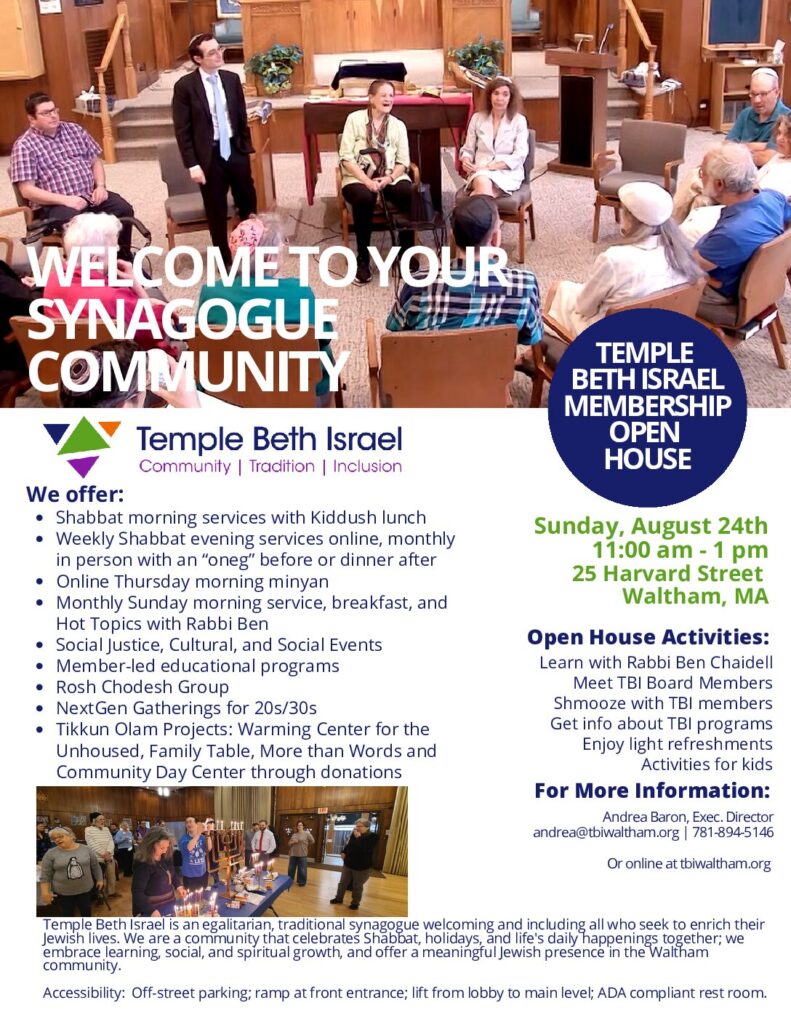
Temple Beth Israel is a vibrant, diverse, traditional and close-knit congregation. We are an independent synagogue that seeks to provide spiritual, social and physical access to and inclusion in meaningful Jewish life and tradition. We enjoy a full calendar of religious, social, educational and social justice dialogue and activities for the many ways our congregants and friends connect to Judaism, to their community, and to the world at large. With a 100+ year history in Waltham, on any given day we find members who were born into Temple Beth Israel warmly embracing newcomers.
Quick Online Links:
To view our online and phone in service links click here. You can also click on any of the services below to join on Zoom.



“My house shall be a house of prayer for all people.” (Isaiah 56:7)
Click the fliers below to sign up to attend / pay for, any of these wonderful events.
We updated our community health protocols on May 7, 2023. View full information and procedures here.
https://tbiwaltham.org/wp-content/uploads/2025/06/ms38388949.txt